
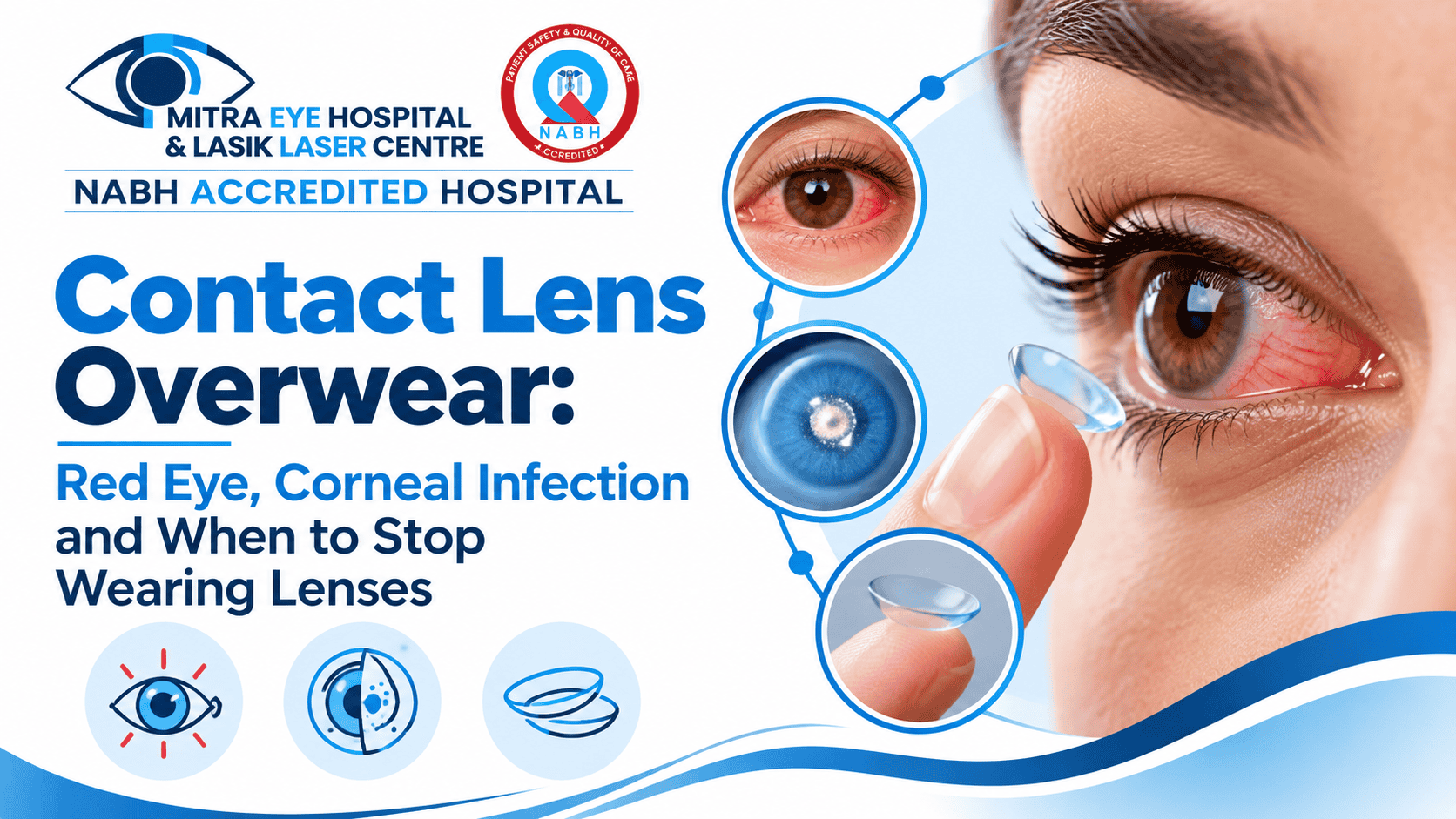
The Hidden Risks of Prolonged Contact Lens Wear
Contact lenses offer remarkable visual freedom and convenience for sports, daily activities, and social occasions. However, failing to follow proper hygiene protocols or wearing lenses past their prescribed schedule can lead to severe corneal complications, including microbial keratitis, corneal hypoxia, and irreversible corneal ulcers.
Why Does the Cornea Need to Breathe?
Unlike other tissues in the human body, the human cornea does not receive oxygen through blood vessels. It absorbs oxygen directly from atmospheric air through tear film. When a contact lens covers the cornea for excessive continuous hours or during sleep, oxygen permeability drops drastically.
“Never sleep with your contact lenses on unless specifically prescribed by your ophthalmologist. Sleeping with lenses increases corneal infection risks by tenfold.” — Dr. Akshay Mitra
When to Stop Wearing Lenses Immediately
Remove your contact lenses and visit Mitra Eye Hospital promptly if you experience any of the following symptoms:
- Persistent eye redness or severe pain
- Cloudy or blurry vision that does not clear on blinking
- Excessive watery or yellowish discharge
- Extreme sensitivity to indoor lights or sunlight (photophobia)
- A visible white or grey dot on your cornea
Our specialists perform high-resolution slit lamp biomicroscopy and corneal staining to detect early infections before corneal scarring occurs.