
Eye Surgery
06 Nov 2026
By Dr. Akshay Mitra
3 min read
5 views
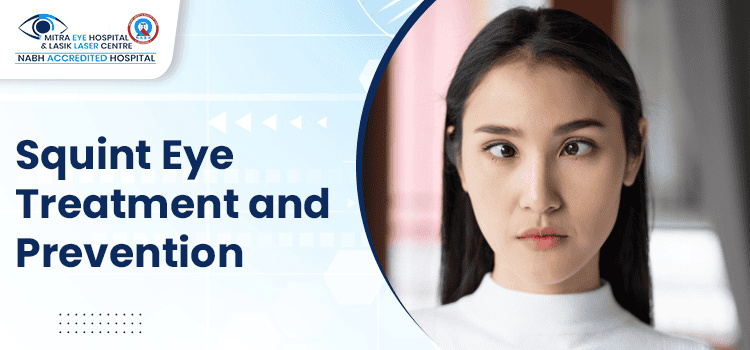
Squint eye treatment
Squint or Strabismus is one of the common eye conditions that impact both eyes. With that, there are increased chances that the eye does not look in the same direction. There's a possibility that one eye looks in another direction and another looks in another. Basically, it can make the eyes points towards in:- Inwards
- Outwards
- Upwards
- Downwards
Symptoms of squint
Given below is the list of the eye squint that might suggest you undergo Squint Eye Surgery in Punjab:- The eye does not look straight in one direction
- The misalignment can be large, and the brain might not make efforts to make the same straight.
- The misalignment is less or not that constant, which can make the eyestrain and headache worse with time
- Possibility to experience fatigue when the vision becomes unstable or jittery.
- Your child might have a problem when going in the sunlight, and they require the head tilt to see the eyes.
- Increased chances of vision loss due to misalignment, that's referred to as amblyopia.
Causes of squint
When the eye muscles are not able to coordinate properly, there's an increasing problem. There is a problem with the eyes aligning themselves correctly. Additionally, it's difficult for the eyes to have the right depth. It's the focusing effort with the brain that makes everything much more difficult.Types of squint
The most common types of squint are:- Convergent squint
- Paralytic squint
Tips for squint prevention
For the prevention of squint, it's essential to get the problem detected early. Most importantly, the child needs to get the eyes tested on a regular basis under the supervision of the best eye doctor. Ideally, it needs to begin by the age of 3 months to 3 years to ensure there's no sign of squint.Squint test to determine the right course of treatment
To understand whether your child has a squint or not, it's important to carry out a certain test that makes it easier to plan further treatment:- Retinal examination - Most common means to test squint
- Visual acuity test
- Cover or uncover the test
- Corneal light reflex
- Nervous and brain system testing
Squint treatment under the expertise of an eye doctor
Initially, the eye doctor focuses on getting the lazy eye or amblyopia corrected. For that, it's essential to patch the eye that's healthy and allow the weak eye to get trained to deal with the situation effectively. In case the problem does not get addressed even after that, then the choice of surgery makes the effective choice. In case the problem is mild, then the choice of eye exercise and glasses are suggested to handle the situation.Cost of squint eye treatment
The cost of squint eye treatment is a one-time investment. On average, the treatment cost is around Rs 7000 for a higher option.