
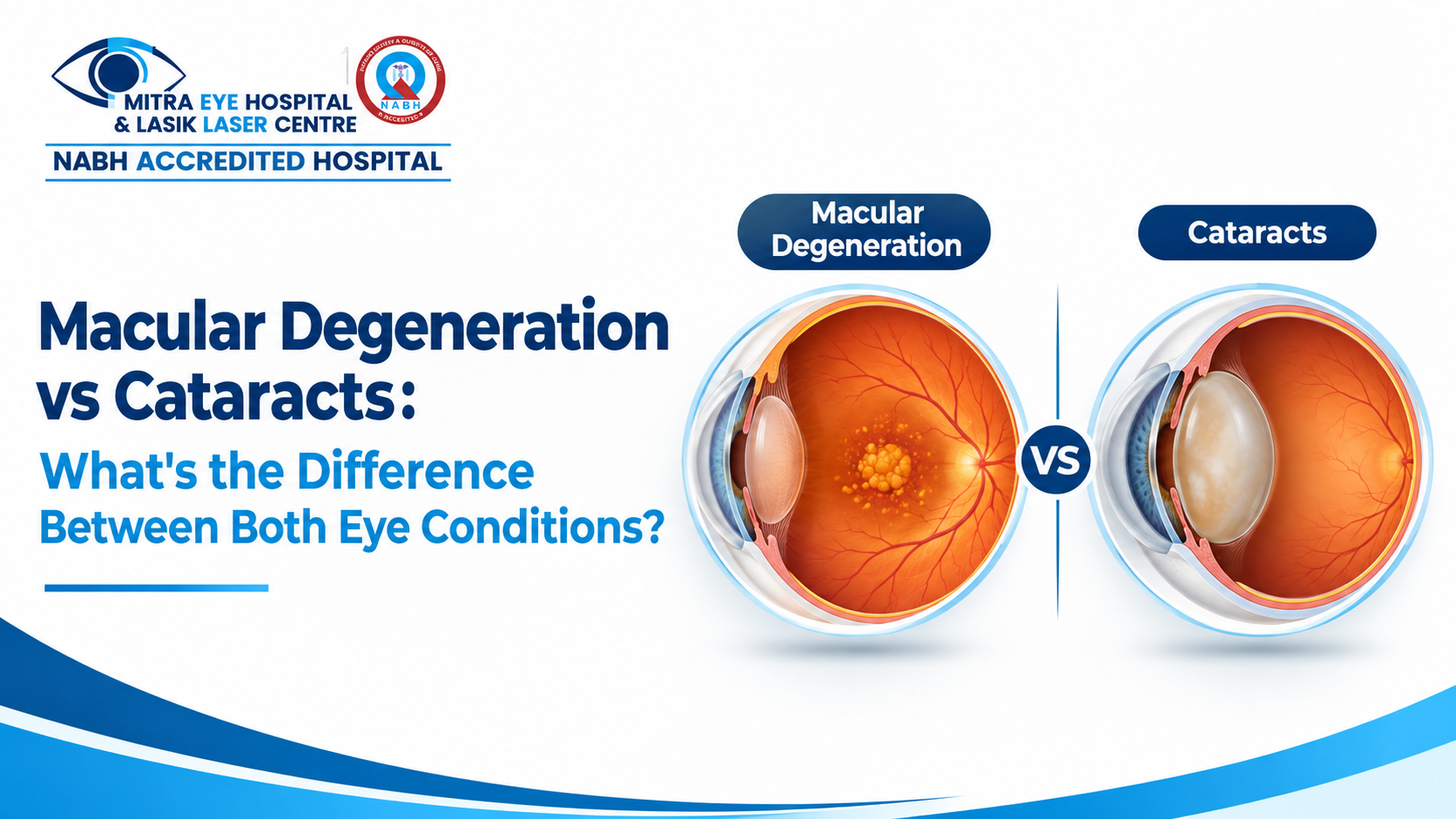
Macular degeneration and cataracts are both eye conditions that can affect a person’s vision. Macular degeneration is a condition that affects the macula, which allows the eye to see fine lines in detail. Cataracts occur in the front lens of the eye, which prevents light from reaching the retina. Macular degeneration occurs when the person loses central vision, making it difficult to see fine lines in detail. It's associated with the person's age. Dry macular degeneration occurs when the macula gets thin and small collections of lipid and protein grow under the retina. Wet macular degeneration is considered more serious than dry macular degeneration; it occurs when blood vessels grow under the retina. On the other hand, cataracts cause clouding of the lens and prevent the light from getting to the retina. Cataract develops over time and can interfere with vision. It can make daily life difficult, especially activities like driving or reading.
Key differences
As both conditions can affect the vision of the individual, there are some points that can make the difference between macular degeneration vs cataracts. The points are mentioned below:
Part of the eye affected
Cataracts cloud the front eye lens, which prevents the light from reaching the retina, on the other hand, macular degeneration affects the macula, the central part of the retina that allows the eye to see fine lines in detail.
Symptoms
Both conditions can share the same symptoms, but the major difference is that macular degeneration causes dark areas that appear in the centre of vision.
Difference in symptoms
Macular degeneration
Distorted shape of objects
Dark or white spots in central vision
Straight lines looking wavy
Cataract
Sensitivity to glare and light
Need bright light to perform activities such as reading
Double vision in a single eye
See halos around light
Difference in causes
Macular degeneration
Lack of exercise
High blood pressure
Not eating a balanced and nutritious diet
Cataract
Eye tissue injury
Past eye surgery
Using steroids for a long time
Diagnosis difference
Both ophthalmologists and optometrists, eye care specialists, can detect both conditions in one appointment. There are some similarities between the two conditions, but with the help of different tests, eye specialists can determine which condition affects the eye.
Diagnosing macular degeneration
An eye exam is conducted by eye specialists, followed by a screening test to detect macular degeneration earlier and provide the appropriate diagnosis. This helps the patient detect any dark or blank spots in their vision. As the patient undergoes an eye screening, the doctor looks into the patient's eye to see changes in the retina using a special lens.
Another option is OCT, which is non-invasive and uses light waves to make a clear image and cross-section of the patient's retina. An eye care specialist diagnoses the layers of the retina, which helps to measure the thickness of the retina. The measurement helps with diagnosis.
Diagnosing cataract
Multiple test options help to diagnose a person with cataracts. The tests include:
Visual acuity test, which measures how well the person is able to read the letters to determine the sharpness and visual clarity of vision. One eye is covered during this test to view progressively smaller letters throughout the entire test.
Slit lamp examination: this is the device used to examine the cornea. It involves the use of intense light and a microscope to look into the front of the eye.
Retinal examination: during this, eye care specialists put eye drops in the person’s eyes to dilate the pupils.
Treatment difference
There are straightforward differences in how doctors treat both conditions.
Options for macular degeneration
Patients with dry macular degeneration can find the following supplements that help with symptoms, including vision loss, the supplements are:
Vitamin C
Vitamin D
Zinc
Copper
Usually, anti-VEGF medicines are prescribed by doctors for patients with wet macular degeneration. They administer this with the help of an injection into the eye, which blocks the growth of blood vessels under the retina.
As per the recommendations of nutritionists, they advise eating healthy foods that help to slow down the condition and prevent the symptoms. They advise eating:
Leafy greens
Yellow vegetables and fruits
Fish
Options for cataract
Cataract can be treated with cataract surgery. During this, the cloudy lens is removed and replaced with an artificial, clear one, which is known as an intraocular lens. This is a quick surgery with minimal healing time.
The results of the study found that clinical trials demonstrated the benefits of vitamin C supplementation to manage cataracts in cases where patients have low levels of vitamin C.
Summary
Macular degeneration and cataracts both affect vision, one affects the eye lens, and the other affects central vision. There are various differences between the two conditions, but if you are experiencing any of the symptoms mentioned above for either condition, then without any delay consult with the eye specialists for early diagnosis and get treatment before the condition gets worse. At Mitra Eye Hospital & Lasik Laser Centre, you will get the treatment facilities for both conditions under the supervision of Dr. H. Mitra, a professional and experienced eye care specialist at our hospital.
FAQ’S
Is it possible that a patient can have both conditions at the same time?
Yes, it's possible that a patient can have both conditions at the same time.
What are the symptoms of macular degeneration and cataract?
The symptoms of macular degeneration are dark or blank spots in central vision, and the symptom of cataract is that the eye lens becomes cloudy.
What is the one common cause of both the conditions?
The common cause of both conditions is aging.
How can both conditions be treated?
Cataract is treated with the help of cataract surgery, and macular degeneration is treated using nutritional supplements or some targeted therapies advised by eye care specialists.